
What Makes China a Top PVC Board Hot Stamping Foil Manufacturer for Durable Decorative Finishes
2026-06-14
When it comes to durable decorative finishes, few materials deliver the crisp, metallic brilliance of PVC board hot stamping foil. China has emerged as a dominant force in this niche, thanks to advanced manufacturing, stringent quality control, and a deep understanding of global design trends. Among the key players, GUMPTION stands out for its consistent performance and wide colour range—making it a go-to choice for furniture, edge banding, and interior profiles. But what exactly sets Chinese manufacturers, and brands like GUMPTION, apart in the global market?
Advanced Material Formulations Unlock Superior Adhesion on PVC Substrates
Achieving reliable adhesion on polyvinyl chloride substrates has long challenged formulators due to the material’s low surface energy and plasticizer migration. Conventional adhesives often fail to form durable bonds, leading to delamination in demanding applications. Recent breakthroughs in polymer science have yielded innovative material blends that chemically interact with the PVC surface, penetrating micro-roughness and anchoring at a molecular level, overcoming inherent repulsion and creating a resilient interfacial layer.
Key to these advanced formulations is the integration of functionalized copolymers and reactive diluents that swell the substrate slightly without compromising its integrity. This controlled interpenetration enables mechanical interlocking alongside covalent and ionic bonding mechanisms. Tailored crosslinking systems further enhance cohesive strength and flexibility, ensuring the bond withstands thermal cycling, moisture, and chemical exposure. Modifiers also lock in plasticizers, preventing their migration to the bond line—a common cause of adhesive failure.
The practical impact is evident across industries such as automotive interiors, medical devices, and flexible electronics, where robust, long-lasting adhesion is critical. These material formulations not only improve initial tack and peel strength but also maintain performance under stress, reducing warranty claims and enabling lighter, more sustainable designs. By moving beyond one-size-fits-all solutions, manufacturers can now tailor adhesion properties to specific PVC grades, opening new possibilities in product engineering.
Precision-Engineered Foil Layers Deliver Consistent, High-Definition Patterns
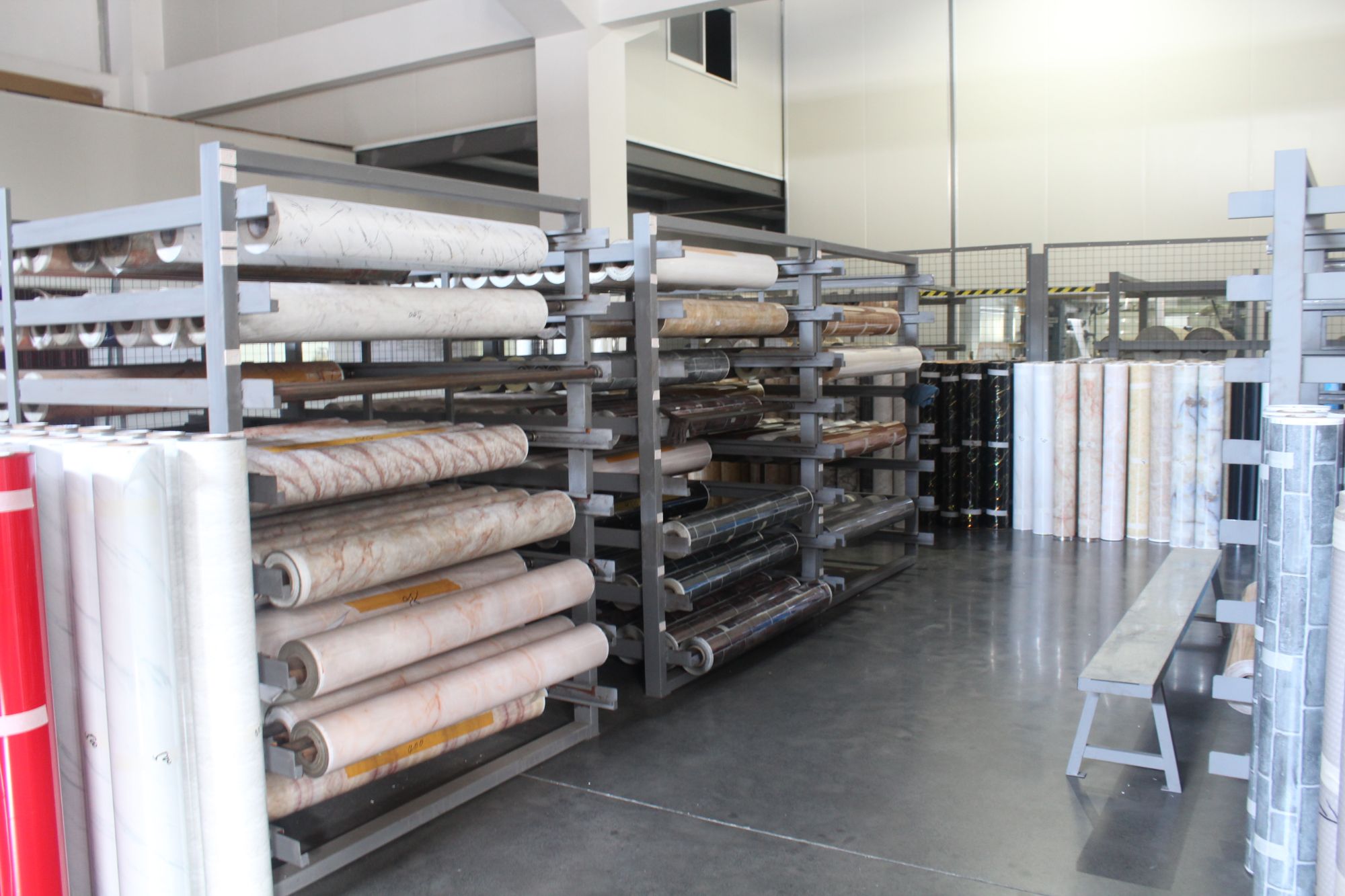
Every sheet in our foil line is stretched to micron-level tolerances, a deliberate engineering choice that locks in repeatable brilliance. Across thousands of impressions, the surface topography stays perfectly uniform, so the gloss and matte transitions remain razor-sharp without gradual drift or softening. It’s this structural exactness that turns ordinary reflections into crisp, tactile detail.
We’ve moved beyond generic coating formulas, tuning the aluminum layering to balance rigidity and pliability. The result is a material that won’t micro-crack under compound curves or lose definition at embossed edges. When light hits an intricate lacework design or a fine security guilloche, the pattern breathes with a near-three-dimensional clarity that cheaper foils simply smear away.
By integrating a proprietary tempering pass into the rolling process, internal stress points are neutralized before they can warp the finish. This means fewer rejected sheets, faster makeready, and a final look that feels intentionally crafted rather than mass-produced. Whether it’s a minimalist logo or a full-flood holographic, the consistency is baked into the substrate itself—not just printed on top.
Cost-Efficient Manufacturing Without Sacrificing Long-Term Durability
Slashing production expenses often triggers worries about corners being cut. But modern engineering flips that notion on its head. By refining material selection and streamlining assembly processes, manufacturers can build products that shrug off wear and tear without inflating budgets. The secret lies in pinpointing exactly where durability matters most and allocating resources there, rather than over-engineering every component.
Take structural load paths, for instance. Instead of using premium alloys across an entire frame, advanced simulation tools let designers reinforce only high-stress zones. Pair this with automated welding techniques that reduce human error, and you get consistent joint strength at a lower per-unit cost. It’s a deliberate, data-backed approach that trades brute-force excess for intelligent efficiency.
Rapid Customization Capabilities for Niche Design Demands
When a client walks in with a sketch that falls well outside our standard catalog, the typical reaction isn’t hesitation—it’s a quick config check. Over time, we’ve built a workflow that decouples core components from cosmetic layers, letting us swap materials, adjust layouts, and re-route internal architectures without starting from scratch. That means a boutique hotel’s request for 200 uniquely patterned light fixtures doesn’t spiral into a six-month engineering delay; it’s more about smart parameter tweaking and a rapid physical prototype on our small-batch line.
A recent project for a micro-mobility startup illustrates this well. They needed a handlebar console with a very specific thumb-controller recess, a gesture that most suppliers dismissed as a low-volume headache. We pulled an existing console frame from our library, re-profiled the molding tool insert through a quick CNC pass, and swapped the surface finish to a soft-touch elastomer overmold. In less than three weeks, they had samples that felt bespoke but cost far less than a ground-up design. That kind of agility comes from keeping critical sub-processes—like rapid tooling and low-volume urethane casting—in-house.
The real advantage isn’t just speed; it’s how this approach reshapes risk. Niche demands often carry an unspoken fear of committing to large inventories. By building a bridge between high-mix prototyping and repeatable production, we let designers iterate on real-world feedback without burning their budgets. A furniture studio recently refined the lumbar curve of a task chair three times before locking the final form, all within a single production cycle. That level of responsiveness turns a one-off request into a long-term collaboration.
Sustainable Practices That Meet Global Eco-Standards for Foil Production
Producing aluminum foil with a genuine commitment to the environment goes far beyond basic recycling claims. Manufacturers now embed sustainability into every stage, from sourcing low-carbon primary aluminum through inert anode technology that slashes process emissions, to powering rolling mills entirely with renewable energy. Closed-loop water systems prevent industrial discharge, while scrap recovery within the plant reaches near 99 percent, ensuring virtually no process waste enters landfills.
Meeting rigorous global eco-standards requires verifiable performance. Leading foil producers align with ISO 14001 environmental management, the Aluminum Stewardship Initiative’s chain-of-custody certification, and the EU’s REACH regulation on chemical safety. These frameworks demand transparent lifecycle assessments, third-party audits, and continuous improvement targets that hold facilities accountable for their carbon footprint, raw material traceability, and human health protections.
True differentiation comes from how producers embed circular thinking into product design. Thinner, high-strength alloys cut material usage per application without sacrificing barrier performance, while mono-material foil-based packaging replaces multi-layer laminates that are impossible to separate. By engineering for recyclability from the start and actively participating in post-consumer recovery schemes, foil manufacturers help close the loop, keeping the metal in use indefinitely—a direct answer to the growing demand for products that respect planetary boundaries.
Integrated Quality Control from Raw Polymer to Final Embossed Finish
From the moment raw polymer enters our facility, every stage of production is governed by a tightly integrated quality framework. Incoming materials undergo rigorous testing—viscosity, thermal stability, and color consistency are all verified before they ever reach the extruder. During processing, in-line sensors continuously track temperature, pressure, and thickness, feeding data directly to our centralized control system. Any drift outside predefined tolerances triggers immediate adjustments, ensuring each meter of film or sheet meets the exact specifications required for flawless downstream embossing.
The embossing stage itself is where precision truly converges with artistry. Surface detail, gloss level, and tactile uniformity are inspected under multiple lighting conditions, and samples are cross-sectioned to confirm pattern depth and integrity. This seamless loop—from polymer pellet to embossed roll—means we can trace a finished product back to the very batch of raw material and the exact machine settings used. The result isn't just a pristine surface; it's a commitment delivered through every layer of the process.
FAQ
China's edge stems from a mature industrial ecosystem that integrates raw material supply, advanced coating and embossing technologies, and large-scale manufacturing. Strict quality control at every stage ensures foils consistently deliver high-definition patterns and durable adhesion on PVC boards, which is essential for long-lasting decorative surfaces.
Producers employ specialized release layers and robust top coats designed to resist abrasion, moisture, and UV exposure. Accelerated aging tests and real-world simulations are standard, verifying that the foil's color and metallic sheen remain intact even after years of handling or cleaning in furniture and interior applications.
Absolutely. Many leading factories have in-house design teams and digital engraving capabilities that allow rapid prototyping. They utilize flexible production lines to handle both bulk and niche orders, maintaining consistent finish and precision through automated tension control and optical inspection systems.
Hot stamping is a dry process that eliminates solvents and reduces VOC emissions. Chinese manufacturers also focus on recyclable PET carriers and heavy-metal-free pigments, aligning with global eco-standards. This makes the decorative finishing step cleaner and more sustainable than wet processes like painting or solvent-based laminating.
Integrated supply chains, energy-efficient production, and competitive labor costs translate into significant savings. Bulk raw material procurement within local markets further lowers pricing, while continuous process innovation minimizes waste, allowing buyers to obtain premium decorative effects at a fraction of the cost of European alternatives.
The range is vast: realistic woodgrains, matte metallic finishes, holographic patterns, brushed textures, and high-gloss mirror effects. Advanced multi-layer coating techniques and precision embossing rollers recreate tactile surfaces that closely mimic natural materials, enabling brand differentiation in furniture, wall panels, and ceiling applications.
They provide detailed application guides, remote troubleshooting, and on-site training when needed. Many also offer customized foil formulations tuned to specific hot stamping machine parameters, such as temperature and pressure, ensuring seamless transfer and minimal setup time for international production lines.
Top manufacturers adhere to ISO 9001 and often comply with REACH and RoHS for chemical safety. Internal testing covers adhesion (cross-cut), abrasion resistance, color fastness, and thermal stability, with some obtaining SGS or TÜV reports to validate performance, giving buyers confidence in the product's reliability.
Conclusion
China's dominance in PVC board hot stamping foil production stems from a deep understanding of substrate compatibility and pattern integrity. Through advanced polymer blends and coating technologies, manufacturers achieve exceptional adhesion to PVC, ensuring that decorative layers remain intact even under stress. The precision engineering of multi-layer foils enables sharp, consistent embossing that captures intricate designs – from wood grains to metallic textures – without blurring or fading. This consistency is not left to chance; integrated quality systems monitor everything from polymer purity to release properties, verifying each batch against strict performance benchmarks before shipment.
Beyond technical prowess, Chinese manufacturers balance affordability with endurance. By refining production processes and utilizing locally sourced, high-grade materials, they deliver foils that withstand scratches, UV exposure, and daily wear at competitive prices. Manufacturers optimize energy use and minimize waste, passing savings along without compromising the foil's long-term resilience. Rapid customization is another key advantage; factories can quickly adjust formulations and tooling to meet unique project specifications, whether for boutique furniture or large-scale interior panels. Moreover, a growing emphasis on eco-friendly practices – such as solvent-free coatings, water-based release layers, and recyclable carrier films – aligns with global sustainability requirements. Many now employ closed-loop solvent recovery systems, reflecting a commitment that resonates with environmentally conscious brands. These combined strengths make Chinese hot stamping foils a responsible, high-performance choice for durable decorative finishes.
Contact Us
Contact Person: Hsien
Email: [email protected]
Tel/WhatsApp: +86 57387072688
Website: https://www.gsfilm.cn