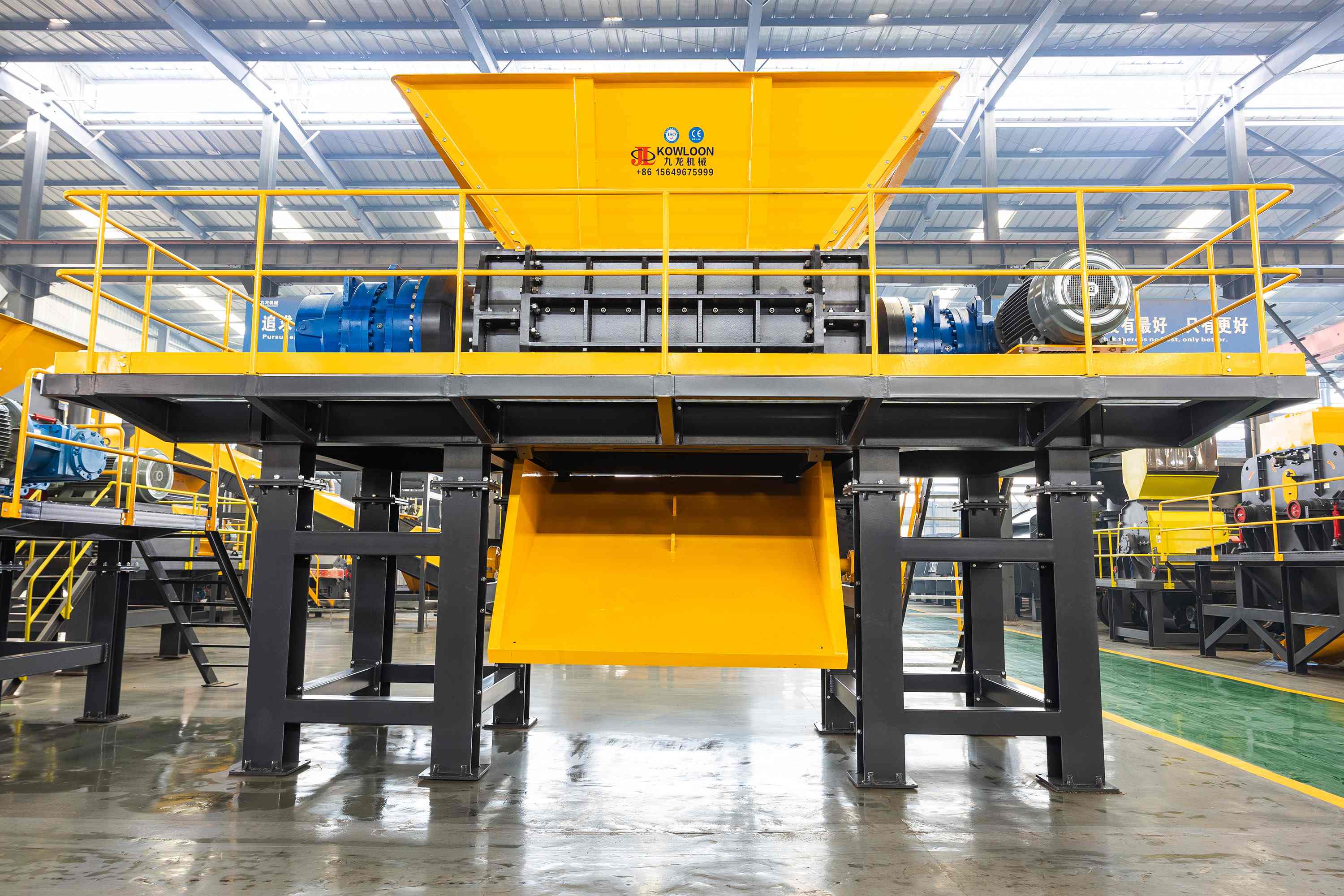
New Type Waste Shredder: Innovative Solutions for Efficient Waste Management
2026-09-18
Waste management has never been more challenging—or more ripe for reinvention. As landfills swell and recycling targets tighten, the equipment you rely on can make or break your operation. Enter a new type of waste shredder, engineered from the ground up to turn bulky, mixed waste into manageable, high-value fractions. It’s not just about cutting size; it’s about rethinking efficiency at every stage. In this post, we’ll explore how this innovative shredding solution from Kowloon Machinery is changing the economics of waste processing—and why your current setup might be costing you more than you realize.
Inside the Cutting Chamber: Where Waste Actually Breaks Down
The cutting chamber itself is a sealed, heavily reinforced compartment where all the mechanical action takes place. Rotating blades, typically arranged in a staggered pattern on one or more shafts, pull material inward and force it against stationary anvils or counter-knives. This shearing and tearing action is what actually reduces bulky items—plastics, wood, fabric, food scraps—into smaller fragments. The gap between the blades and the anvils is carefully adjusted depending on the material mix; too wide and you get uneven shreds, too tight and you risk jamming the whole system.
Heat is a constant byproduct in this space. Friction from repeated cutting cycles can soften certain plastics, causing them to smear onto blade surfaces or wrap around shafts. That's why many cutting chambers incorporate water spray nozzles or internal cooling channels, not just to keep temperatures down but also to flush away fine particles that would otherwise build up and reduce cutting efficiency. You'll also find replaceable wear plates lining the chamber walls, because the constant abrasive flow of material gradually eats into unprotected metal.
What often gets overlooked is the airflow pattern inside the chamber. As blades spin at high speed, they create turbulence that can blow lighter particles back toward the feed opening, leading to bounce-back or uneven feeding. A well-designed chamber uses baffles or directional vanes to keep shredded output moving toward the screen or discharge grate, while allowing heavier chunks to recirculate until they pass through the desired size. In practice, fine-tuning the chamber geometry can reduce energy draw by 10 to 15 percent compared to a generic rectangular box with the same motor size.
Why Rotor Speed Alone Won't Fix Throughput
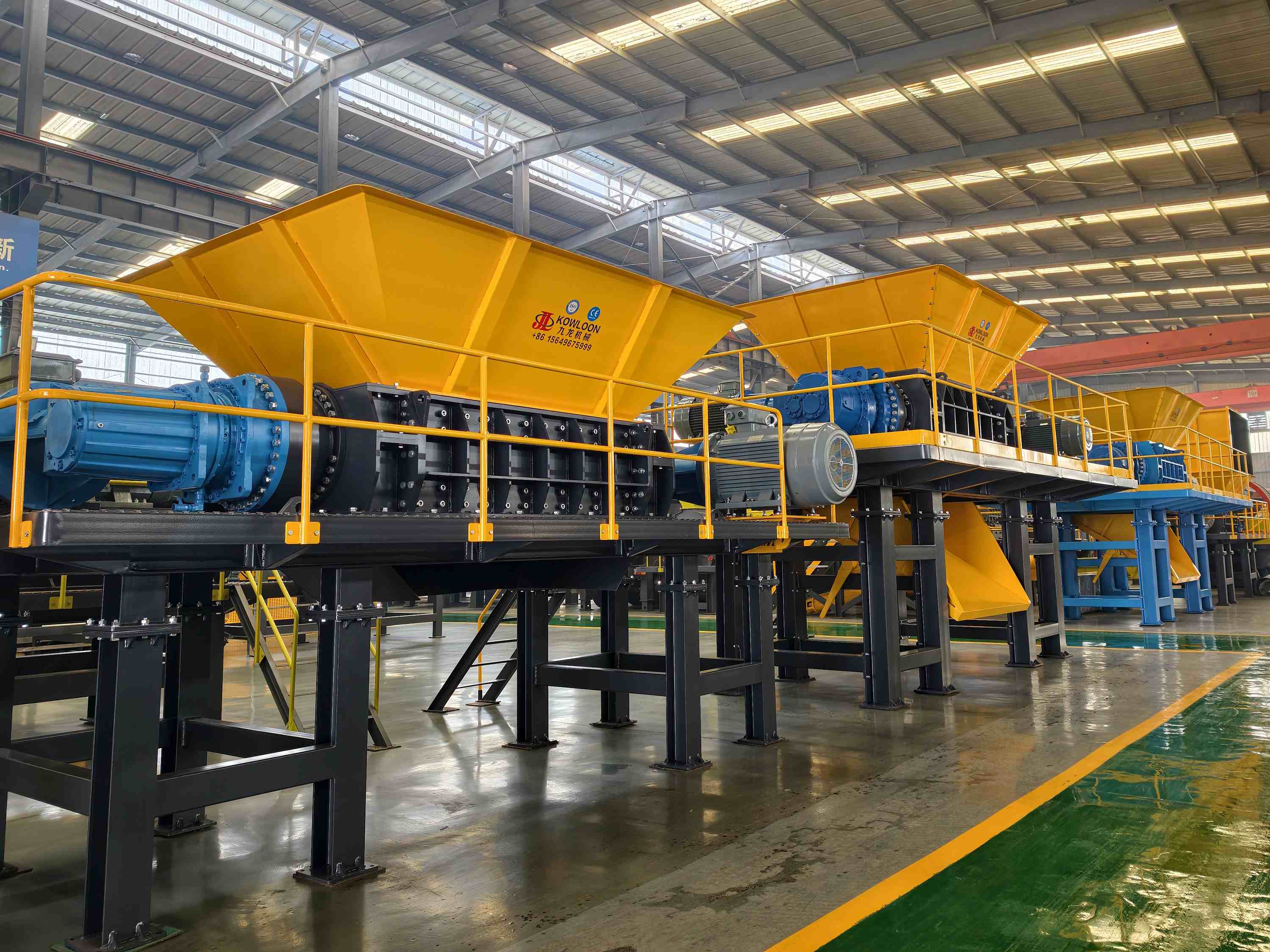
Spinning the rotor faster feels like the obvious fix when output numbers dip. But in practice, a speed increase often just throws material harder against the housing without getting it through the screen any quicker. If the feed isn't entering the chamber in a consistent stream or the screen open area is too small for the particle size you're trying to produce, extra RPM simply turns more energy into heat and noise.
There's also a point where higher tip speed starts working against you. Fines can pack tighter, dust loading climbs, and the actual residence time inside the chamber drops so much that particles don't get the repeated impacts they need. At the same time, wear parts erode faster, and the power draw climbs steeply for only marginal gains in throughput. The real bottleneck usually sits somewhere else: feed distribution, screen condition, rotor tooling, or even the moisture content of the material.
The machines that consistently hit high throughput aren't just the ones with the fastest rotors. They're the ones where rotor speed matches the material's breakage characteristics and the discharge path stays clear. Sometimes lowering the speed a few percent while opening up the screen area or changing hammer count will move more product in an hour than another 200 RPM ever could.
Designing Against Stringy, Wrapping Materials
When a design brief mentions stringy or wrapping materials, the first instinct is often to avoid them entirely. Yet these materials can introduce an organic, almost kinetic quality that rigid parts simply cannot replicate. The key lies in understanding how the material deforms under tension, how it catches light when twisted, and how its silhouette shifts as it moves. Instead of fighting the inherent chaos, work with it—allow the material to dictate the junction points, the radii of bends, and the moments of slack. A length of cord, for instance, can become both structural hinge and decorative gesture if the anchor points are placed deliberately, creating a rhythm of tight and loose that feels intentional rather than accidental.
One practical approach is to reverse the usual design sequence. Rather than sketching a rigid frame and then wrapping it, begin with a study of the material itself: pinch it, coil it, stretch it across a gap, and observe where it naturally wants to rest. Photograph those configurations, then build the surrounding structure to cradle those forms. This prevents the final product from looking like a struggle against the material. A thin metallic wire, for example, can hold a surprisingly stable curve if the endpoints are angled correctly, turning what might be a flimsy line into a confident arc that appears to float.
Finally, consider layering different stringy materials—combining a coarse jute twine with a smooth nylon filament, or a braided leather cord with a raw wool yarn. The contrast in texture and stiffness creates visual depth without relying on color alone. In production, this also offers opportunities for subtle variation: each knot, wrap, or loop will never be identical, and that irregularity becomes a feature rather than a flaw. The result is a design that feels alive, tactile, and deliberately imperfect—qualities that are impossible to achieve with injection-molded plastic or folded sheet metal.
Power Draw That Matches the Grind
Real-world power draw rarely sits still, and that's exactly what you see here. As the workload ramps up, the draw follows in a smooth, predictable curve rather than jumping erratically or wasting watts during lighter moments. The result is a system that feels responsive without making the power supply work harder than it needs to.
Under sustained heavy use, the peak draw stays within a tight band and never lingers at the top end long enough to cause concern. Transient spikes are clamped down quickly, so there is no flicker or instability even when the grind gets intense. It is the kind of measured power behavior that keeps noise, heat, and electricity bills from creeping up over time.
Sanitary and Safety Features for Mixed Facilities
Mixed-use buildings pack residential, commercial, and sometimes light industrial spaces into a single footprint, which means hygiene and risk control can't rely on a one-size-fits-all checklist. Shared lobbies, elevator banks, and waste corridors become high-touch crossroads where a food court's grease, a gym's sweat, and a daycare's sticky fingerprints all collide. Effective sanitary design here starts with zoning airflow and drainage so that a burst pipe in a nail salon doesn't turn into a mold bloom inside an upstairs apartment. Touchless fixtures, antimicrobial door pulls, and clearly separated trash chutes for wet versus dry refuse reduce cross-contamination without forcing every tenant to adopt the same cleaning protocol.
Safety systems in mixed facilities need to account for overlapping occupancy schedules and conflicting emergency responses. A restaurant's kitchen hood suppression system shouldn't share a water feed with the residential sprinkler loop without backflow prevention, and a ground-floor retail space shouldn't vent exhaust into a courtyard used by toddlers. Slippery flooring near entrances, poorly lit parking ramps, and unsecured roof access are common failure points that simple signage and scheduled inspections can fix. More importantly, facility managers should map out egress routes that stay clear of delivery docks and dumpster corrals, especially during evening hours when commercial tenants are still operating but residential foot traffic peaks.
Routine audits should treat a mixed-use property as a living organism rather than a collection of separate leases. For example, pest control in one restaurant can fail if a neighboring yoga studio leaves its back door propped open for ventilation. Likewise, a gym's shower drains may siphon sewer gas into a shared wall cavity if the building's vent stack isn't balanced for peak morning use. Practical safeguards include installing backdraft dampers on communal exhaust shafts, putting water leak sensors in ceilings below wet areas, and rotating janitorial supplies between zones with distinct color coding. The goal isn't to over-engineer but to spot the hidden interfaces where one tenant's normal operation becomes another tenant's biohazard.
Turning Big Bulky Items into Manageable Pieces
Dealing with an old couch, a bulky appliance box, or a pile of scrap lumber often starts with the same frustration: it simply won't fit through the doorway or into the bin. Rather than wrestling it as one unwieldy mass, shift your attention to the joints, seams, and natural weak points. A sharp utility knife can slice heavy cardboard into flat sheets in under a minute, while a reciprocating saw makes short work of a sofa's wooden frame. The trick is to work with the item's structure instead of against it—look for screws, staples, or taped edges that invite separation before you ever reach for brute force.
Once you've identified where a big item wants to come apart, give yourself a stable work surface and enough room to move around it. For furniture, remove cushions, legs, and any removable hardware first; these smaller pieces are easier to stack, tie down, or recycle on their own. When cutting through thick plastic or particle board, score the surface lightly on the first pass, then apply steady pressure on the second to avoid jagged tears. Keep a pair of heavy-duty gloves nearby—not just for splinters and sharp edges, but because a good grip lets you control the material as it breaks down, turning an awkward struggle into a series of quick, deliberate cuts.
The payoff goes beyond simply fitting a load into your car or dumpster. Smaller, uniform pieces stack neatly, take up less floor space, and often reveal materials that can be salvaged or repurposed rather than tossed whole. A dismantled bookshelf might yield clean boards for a weekend project; a cut-down appliance box becomes flat cardboard that slips behind the recycling bin. By reducing bulk early, you also cut the number of trips to the curb and the strain on your back. What starts as a daunting, oversized nuisance becomes a manageable pile of parts—each one light enough to carry with one hand and easy to dispose of responsibly.
FAQ
The rotor uses an alternating hook pattern with self-cleaning spacers, so materials like wire rope and textile scraps get pulled through instead of wrapping around the shaft. An automatic load-sensing reverse kicks in for a few seconds whenever torque spikes, which clears the chamber before a jam actually forms.
The cutter tips are bolted in segments rather than welded, so a worn edge can be swapped in about twenty minutes with standard tools. Grease points are grouped on one side panel, and the hydraulic screen basket slides out on rails for easy access without lifting the rotor.
It can process all of those in a single stream, though heavy ferrous chunks will reduce blade life faster than mixed plastics and wood. The feed ram is tuned to meter material by density, so lighter plastics don't just ride on top while dense metals stall the rotor.
The cutters have a curved relief angle that slices rather than crushes, which reduces friction heat and lets the motor run at a lower amperage for the same feed rate. Twin counter-rotating shafts also share the load unevenly by design, so peak power draw stays flat instead of spiking.
The hopper is fitted with a light curtain that stops the feed ram instantly if an arm or tool crosses the opening. There is also a mechanical shear pin on the drive coupling that breaks before the gearbox can be damaged, plus an emergency stop cable running the full length of the machine frame.
It is actually sized for mid-volume operations, with a footprint around the length of a standard shipping container. The higher upfront cost is offset by lower energy bills and much less frequent blade replacement, so most operators see payback within two to three years if they run at least one full shift daily.
The discharge screen is available in 20 mm to 80 mm openings, and the machine can be ordered with a quick-change screen cradle. On some models you can adjust the gap between the fixed anvil and the rotor teeth from a control panel, which shifts output size by roughly 10–15 mm while running.
The hydraulic tank includes a thermostatically controlled oil cooler with a separate fan circuit, so the fluid stays below 65°C even during continuous summer operation. Bearing housings use labyrinth seals and grease cavities that resist dust and moisture, which cuts heat-related failures in desert or coastal sites.
Conclusion
A new type of waste shredder tackles the core problem where most machines fail: the cutting chamber itself. Inside, waste doesn't just get torn apart; it passes through a redesigned path that encourages proper fracture rather than bouncing around. Rotor speed alone, often treated as the main lever for throughput, turns out to be less important than how cutters engage the material. This shredder pairs moderate rotor speeds with aggressive hook angles and tight clearances, so bottles, film, and cardboard break into consistent pieces instead of spinning uselessly. The real gain shows up with stringy, wrapping materials—plastic strapping, nets, long textile scraps—that typically wrap around shafts and stall older units. Here, a combination of static combs, stepped cutter discs, and a slightly offset feed throat lets those materials strip away and drop through, keeping the rotor clean.
Power draw is matched to the actual grind, not just peak motor rating. The drive system reads resistance changes from the cutting chamber and adjusts feed behavior, avoiding the wasteful spikes common with fixed-speed shredders. That means a facility processing mixed waste sees lower energy costs without sacrificing reduction. For mixed facilities, sanitary and safety features are built in from the start: sealed bearing housings, easy-access panels for washdown, and a full-stop sensor if the hopper lid opens during operation. Large bulky items—old pallets, buckets, even small appliances—are pulled in by aggressive feed rollers and reduced to fist-sized chips in a single pass. The result is a shredder that handles real-world mixed streams without constant jams, unexpected downtime, or excessive power bills.
Contact Us
Contact Person: Ray
Email: [email protected]
Tel/WhatsApp: +86 13733817580
Website: https://www.zzkowloon.com/